
Where to Live in Brisbane: a Suburb Guide to Finding Your Fit |
Compare nine neighbourhoods by transport, food, parks and housing, then test your shortlist against the life you actually lead. |
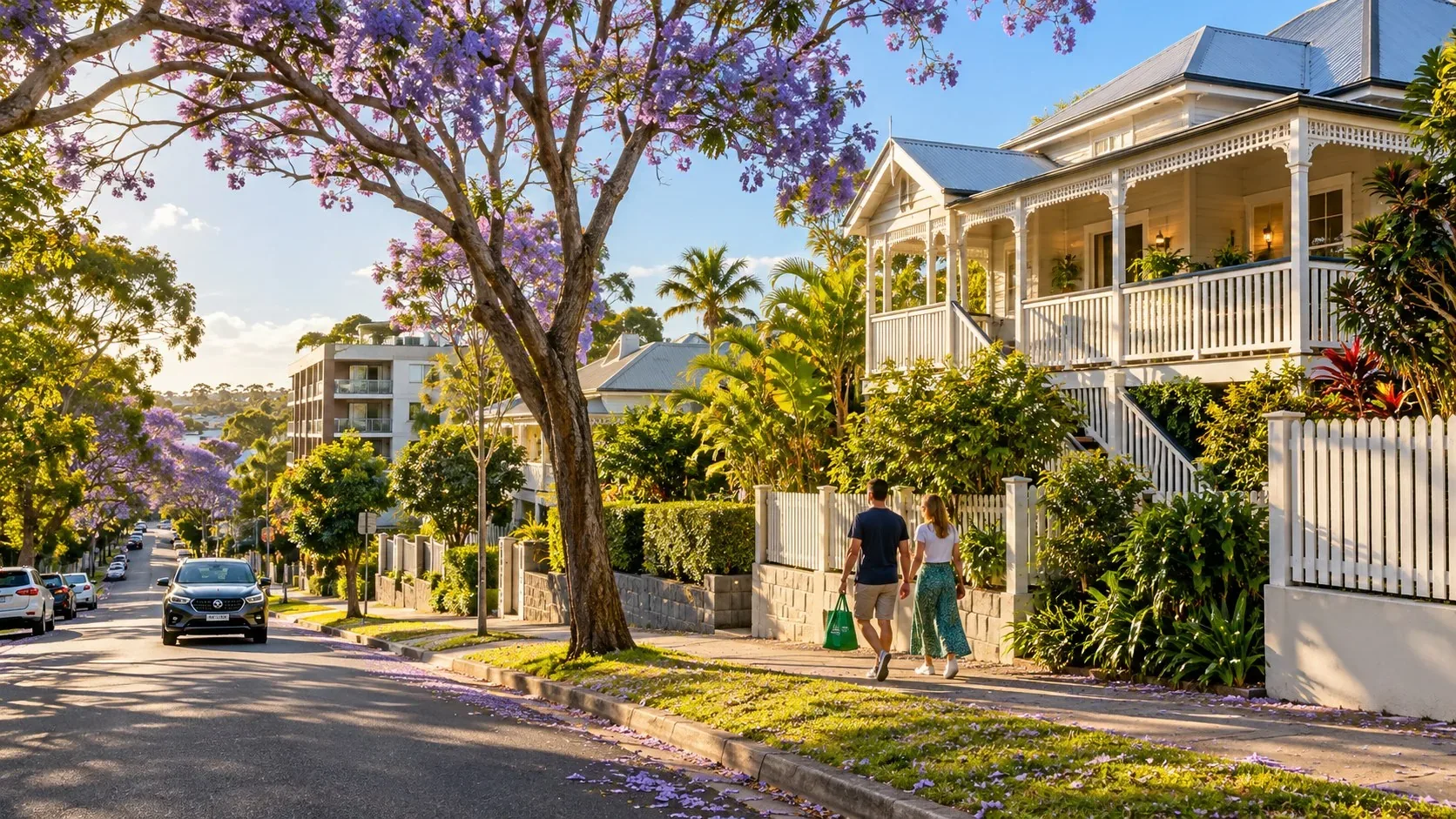
A Saturday coffee can make almost any suburb look like a good idea. The more revealing visit is a Tuesday afternoon, with shopping bags in your hands and the walk home still ahead.
Choosing where to live in Brisbane starts with your ordinary week. Your workplace, household budget and appetite for driving will narrow the search faster than a list of fashionable postcodes.
We've picked nine representative suburbs across the inner city, north, south, east and west. All are within Brisbane City Council. The suggestions are starting points for inspections, with practical trade-offs to check at each address. |
1. Start with the trips you'll make most often |
Put your regular destinations on a map: work or study, the people you visit and any appointments you need to reach. Include school or childcare when relevant. A home convenient for the CBD can be awkward for a job across town.
Use Translink's timetables and network maps to check the whole trip. Count the walk to the stop, waiting time, transfers and the journey home. Test your actual starting time, including weekends or late finishes.
Translink's standard fare is 50 cents per journey across its Queensland network, with exclusions including Airtrain and dedicated school buses. Cheap travel is useful. A reliable connection that gets you home after a late shift matters just as much.
Set a limit on door-to-door travel time before browsing homes. If two adults commute in different directions, check both journeys separately. |
2. Set a housing budget you can compare properly |
Compare like with like: a room in a shared house, a self-contained unit and a detached house solve different needs. Bedroom count, parking and condition can change the bill within the same street.
The Residential Tenancies Authority's median rents quick finder lets you compare a quarter, postcode and dwelling type. Its figures describe new rental bonds lodged during that quarter. They aren't a quote for an available home, and a postcode can cover several suburbs.
Keep a dated list of current asking rents for matching properties. For a monthly comparison, multiply weekly rent by 52 and divide by 12. Add moving costs, internet and likely transport expenses. Buyers should also compare ongoing property costs and inspect body corporate records where relevant. |
3. New Farm: park time and an inner-city routine |
Start with New Farm if you want cafés and everyday errands close to riverfront green space. New Farm Park brings together open lawns, playgrounds and a library, with a ferry terminal beside the park.
Compare older flats, newer apartments and houses on quieter residential streets. A smaller unit could suit a solo resident or couple who'll use the neighbourhood daily; a household needing several bedrooms will be comparing a different set of costs.
Buses and ferries are the public transport options to investigate. New Farm has no suburban railway station. Check the walk from the property to the service you'll actually use, along with evening frequency.
The trade-offs are specific to the building and street: stairs in older blocks, parking arrangements, nearby hospitality noise and flood exposure. A balcony photographed in gentle morning light deserves another look in the afternoon heat. |
4. West End: food and daily life close together |
West End deserves a look if you'd enjoy having food shopping and places to eat woven into your daily route. The West End Markets and the commercial streets around Boundary Street give you a useful place to start exploring. Davies Park adds a riverside green-space option.
Housing includes apartments and older houses, with different levels of street activity around them. Singles, sharers and couples may prefer a compact home close to shops. Families can test whether an apartment layout and nearby open space meet their needs.
Council lists the 199 bus between Teneriffe and West End via the city. Ferry access depends on which part of West End you're considering. Nearby South Brisbane station doesn't make every address in West End a short walk from rail.
Visit on a weekday evening. Listen from the bedroom, check loading areas and investigate current building works. The trade-off for a handy location may be less private outdoor space or more noise. |
5. Nundah: a northside centre with a railway station |
Put Nundah on the list if you want to organise your commute around rail. Nundah station gives you a clear point from which to measure the walk home, while the village offers cafés and food shopping. Oxenham Park, east of the station, provides established sporting grounds.
Look at units around the centre alongside houses farther into the residential streets. An apartment close to the village could suit someone reducing car use; a house may offer more room while adding a longer walk to errands.
Check rail noise and Sandgate Road traffic at the actual property. Nearby on a map can still mean an awkward road crossing with groceries. A home farther from the centre needs its own transport test.
Include current listings in your budget comparison without assuming that every Nundah property is a lower-cost alternative to the inner city. |
6. Chermside: shops and services around a bus hub |
Chermside is a practical northside candidate if major shopping and bus connections are priorities. Westfield Chermside combines shops and dining, while 7th Brigade Park gives you a local park to explore. Compare apartments near the centre with houses in surrounding residential streets. A smaller household may value easy errands; a family may prioritise a floor plan with storage and somewhere to work quietly.
Chermside has no suburban railway station. Use Translink's Chermside locality map to locate your bus stop and check the route to your destination.
The main trade-off is how comfortably you can cross the roads between home, shops and transport. Walk it. Council's 7th Brigade Park project page still describes proposed improvements, so assess existing facilities and current access separately from the plans. |
7. Sunnybank: a southside option for food-focused households |
Look at Sunnybank if Asian groceries and plenty of places to eat are part of your normal week. Sunnybank Plaza and Sunny Park's dining directory covers options including Taiwanese food, hotpot and noodles. Check individual menus for dietary needs.
Compare detached houses with units or townhouses that meet your space requirements. Sharers should check how bedrooms, bathrooms and parking work in practice. Families may put more weight on school access and the walk to local parks, including Les Atkinson Park.
Sunnybank station and the main shopping precinct are separate destinations. Measure both journeys from the property; some addresses will suit a bus-based routine better.
Major roads can divide an apparently convenient area into less convenient walking routes. Try the crossings and visit at dinner time, when the shopping precinct is busy. Also check the suburb on each listing: Sunnybank and Sunnybank Hills are distinct suburbs. |
8. Carindale: space, shopping and a bus-based commute |
Consider Carindale if you need a larger home and want a major shopping centre nearby. Westfield Carindale supplies shopping and dining, and Carindale Recreation Reserve is a local park to include in your inspection route.
Inspect houses and townhouses according to the outdoor space you can maintain and the rooms you need. A large floor plan can be useful for a multigenerational household, provided stairs and bathroom locations work for everyone.
Carindale has a bus interchange, with city connections listed by Council, but no suburban railway station. An address close to the interchange offers a different routine from one requiring a feeder bus or drive.
Check school-run traffic and whether your usual errands would require a car. Council lists the reserve upgrade as in progress. Inspect current access and avoid treating the full concept plan as completed facilities. |
9. Wynnum: a bayside routine with rail to check |
Wynnum deserves a place on the list if a foreshore walk would become part of your week. Wynnum and neighbouring Manly offer waterfront parks, cafés and local shopping. This is Moreton Bay foreshore, with tidal flats and sheltered water; picture a different setting from an ocean surf beach.
Compare houses, townhouses and units against the walk to shops and your chosen station. A home near the foreshore and a home near Wynnum Central station may make different compromises.
Test the train journey at the times you'd travel, including the last leg to work. Working locally or partly from home may make the bayside easier to fit into your week.
A frequent cross-city commuter needs a stricter travel-time test.
Check flood mapping and property condition at the exact address. For homes exposed to salty air, inspect corrosion and ask about maintenance. An attractive water outlook is only one part of the decision. |
10. Toowong: an inner-west base for transport and errands |
Toowong puts rail, buses and a shopping centre in the same local area. Start at Toowong Village, then check the walk from any prospective home to Perrin Park.
Compare units and apartments near the centre with houses on residential streets. Students and workers should check the journey to their actual campus or workplace. A household that can share one car may value the location differently from one needing several parking spaces.
Station access, bus stops and river transport aren't interchangeable. Measure the walk to each service you expect to use, then check the timetable.
Hills, major roads and railway noise can change the experience over a short distance. Walk home carrying something. The uphill stretch has a way of explaining itself. Check river and overland-flow exposure separately for each property. |
11. Paddington: cafés and character, with hills attached |
Paddington could suit you if you enjoy a neighbourhood built around a shopping and café strip. Given and Latrobe terraces provide a clear route for exploring local businesses, with Neal Macrossan Park another place to include in a visit.
Compare older timber houses, smaller units and renovated properties with attention to stairs, storage and summer comfort. A character home may suit someone who values a veranda and separate rooms, but check how it performs with the doors shut and the afternoon sun on the windows.
Paddington has no suburban railway station. Check buses from the relevant part of the suburb; walking to Milton station will suit some addresses better than others.
Slopes matter for prams, mobility aids and anyone carrying the weekly shop. Around the stadium end, check event-day parking restrictions and noise. Inspect the quieter street as carefully as the attractive café frontage. |
12. Visit your shortlist before you commit |
Take the same checklist to each address. You need enough detail to compare homes after the inspection-day optimism wears off.
Score each home against your own non-negotiables, then write down the compromise you'd be accepting. That final note is often more useful than another dozen listing photos. |
13. Build a shortlist around your household |
Give every adult in the household a separate shortlist. Compare the reasons behind your choices before booking inspections together. A shorter commute for one person can leave another doing every errand by car.
Pick three suburbs and inspect a few comparable homes in each. Before deciding, picture the first wet weekday when you're tired and need dinner. Choose a place where that evening still works.
For more local guides and places to explore, subscribe to Brisbane InFocus.
Research checked 25 October 2026. Recheck fares, services, park access and available properties before making plans. |
1 Comment
Join the conversation
The Tuesday afternoon test is so real. We visited Paddington on a Sunday and thought it was perfect. Moved in and then realised the bus situation was a nightmare on weekdays. Wish someone had told us that before we signed the lease.